City of Casey has backed calls for urgent national packaging reform, amid rising levels of recyclable plastics dumped in landfill.
Recently, Australian Local Government Association (ALGA) president Matt Burnett stated without reform, the recycling system faced collapse and landfills overwhelmed by rising deposits of recyclable material.
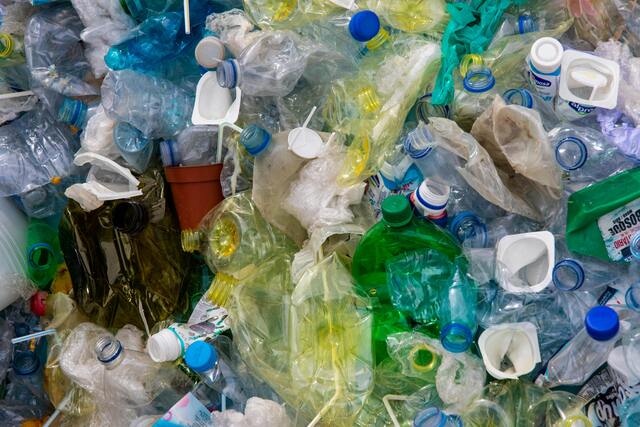
“Each year, Australia uses more than 1.3 million tonnes of plastic packaging but more than 1 million tonnes ends up in landfill or as litter.
“Local councils are overwhelmed by rising volumes of packaging and plastics, with landfill capacity nearing its limits.”
He called for a regulated scheme – a National Extended Producer Responsibility Scheme (NEPRS – to require companies to “reclaim, recycle and reuse” their commercial packaging and plastic.
Under the federal government’s Recycling Modernisation Fund (RMF), a $4 million funding package has been initiated to upgrade four recycling plants, including facilities in Dandenong and Pakenham.
The joint project between the state and federal governments aims to boost annual plastic recycling by 16,700 tonnes.
However, advocates for reform say the increased capacity cannot be utilised without regulatory measures that place more responsibility on the private sector.
“Investments in domestic recycling were made in anticipation of a mandatory national scheme, a promise yet to be fulfilled,” Cr Burnett said.
According to a recycling industy report, Securing Australia’s Plastic Recycling Future, the recycling system was struggling not because of a lack of infrastructure, but because recycled plastic is often more expensive than imported virgin material.
Manufacturers have little incentive to buy recycled material, leaving recycling facilities underused and financially vulnerable.
Cr Burnet noted that a mandatory NEPRS would only add 0.1 per cent to product costs, according to the report.
“Councils and ratepayers already carry a significant cost burden. They can’t afford to bear the additional cost of doing nothing.”
Waste levies have continually risen for Casey and Greater Dandenong – up 12 per cent and 2 per cent respectively in 2025-‘26.
They’re absorbing a 27 per cent rise in the state government’s landfill levy.
Casey mayor Stefan Koomen said the council supported reforms in plastic packaging, including mandatory Extended Producer Responsibility,” he said.
“We know this can work, as demonstrated through the Container Deposit Scheme for bottles and cans.
“Across Australia, it is estimated that less than 13 per cent of plastic is recycled. To truly move to a circular economy, we must implement solutions that consider design, production and reuse.
“Making companies responsible for the cost of disposal or recovery of their products and packaging would encourage more transparent practices and innovations to help reduce waste in the first place.”
Greater Dandenong hadn’t formally considered its position on a NEPRS.
Acting chief executive Sanjay Manivasagasivam said reducing the impact of plastics on the environment and limiting waste to landfill were priorities.
He welcomed several supermarkets in Greater Dandenong restarting their soft plastics collection, as well as innovative business APR ChemCycle coverting soft plastics into commercial-grade oil.
Federal Environment Minister Murray Watt said the Albanese Government was progressing work on packaging reform as part of its broader circular economy agenda.
“Reducing and responsibly managing Australia’s plastic waste, including mandating better design and the uptake of recycled content, is a key part of our circular economy commitment,” he said.
He pointed to more than $200 million invested through the RMF, which he said had increased national recycling capacity by more than 1.4 million tonnes a year.
“We want to see all businesses take responsibility for the environmental impacts of their packaging as we transition to a circular economy,” Mr Watt said.
The State Government stated it continued to advocate for packaging reform while investing $65.9 million across more than 100 plastic recycling projects statewide.
“We are making sure major infrastructure projects across the state use recycled material, including plastics, from noise reduction walls along the Mordialloc Freeway to the new Elephant enclosure at Werribee Zoo, to create a circular economy,” a spokesperson said.
Under the NEPRS outlined in the report, fees would be linked to the amount and type of packaging used, with lower costs for packaging that is recyclable or contains recycled content.
Revenue raised would be ring-fenced to support recycling, waste collection and domestic markets for recycled plastics, addressing what the report describes as a “market failure” that currently leaves councils and households paying for packaging waste through rates and waste charges.