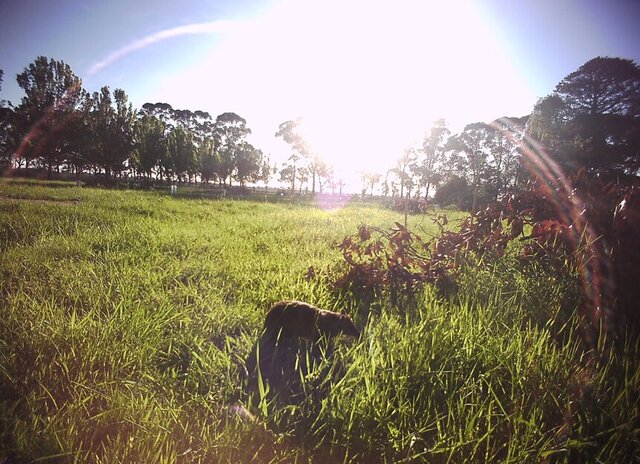
Endangered southern brown bandicoots are already settling into the future Clyde Regional Park site, after local rangers trialled a “simple” habitat restoration program.
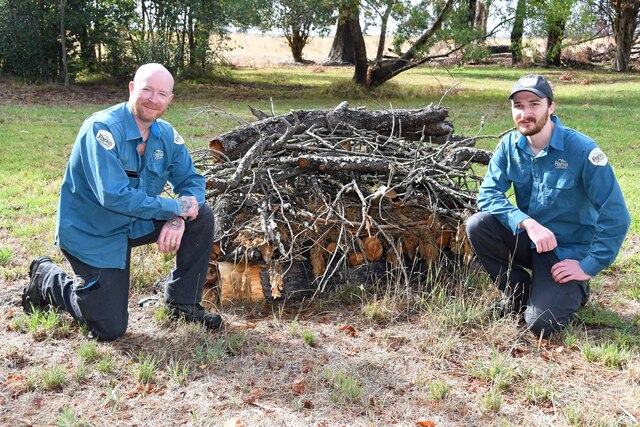
Parks Victoria rangers Dale Tuck and Hakea Robison took Star News onsite this week to see how their trial of “simple bandicoot bungalows” is helping wildlife find shelter far sooner than expected.
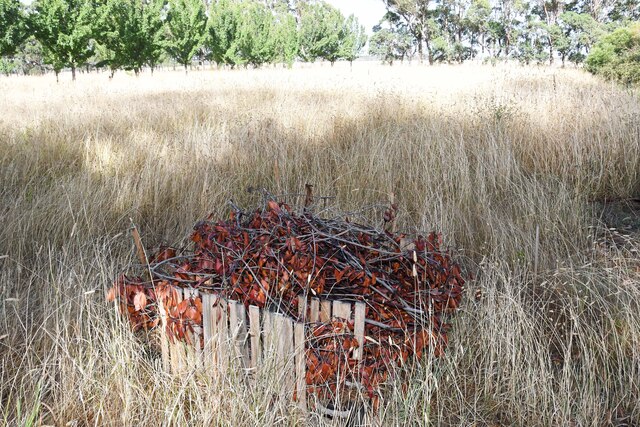
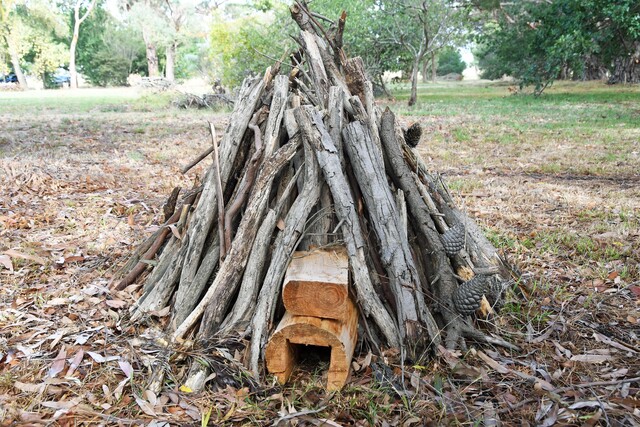
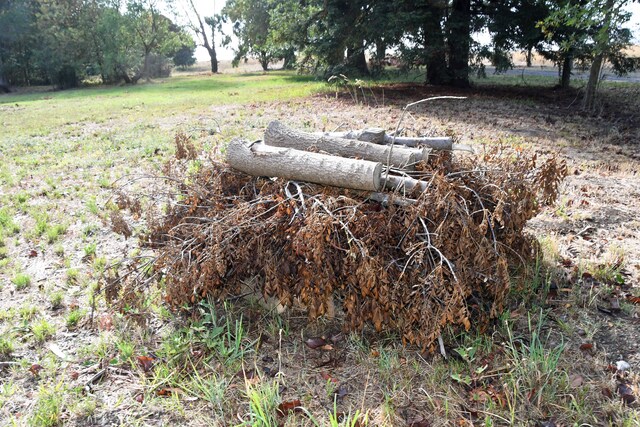
The temporary shelters, built from timber pallets at the bottom, a layer of hay in between, and logs and branches (with a lot of leaves) on the top, which are cleared during weed removal, are designed to provide refuge while large-scale revegetation works get underway. There are small openings at the bottom for bandicoots to get inside.
“The bandicoots can go in there, and they can reach up and pluck a bit of that hay down and nest in, and it’s predator-proof, so foxes can’t get in there, cats can’t get in there,” Dale said, showing Star News one of the bungalows he made.
“They can stay nice, warm, and dry. Really simple, and it’s a set-and-forget. So, we won’t have to remove these at any stage. Over the years, they’ll eventually break down.”
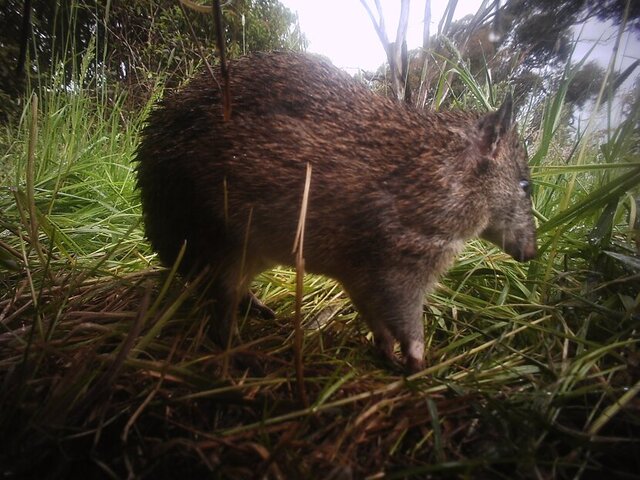
Trail cameras have already captured bandicoots moving into the shelters within six weeks of installation, a rapid uptake that surprised even the rangers. Beyond cameras, rangers can see the movement of the grass around the bungalows, which also tells that bandicoots have been using these facilities.
“It is quick. I was so surprised,” Dale said.
“It’s been really interesting here with the bandicoots because all the sightings we’ve had have been during the day, but bandicoots normally are nocturnal.
“We’ve seen them a lot during the day. It is very interesting.
“Over at Cranbourne Botanic Gardens, they’ve got the same thing going on there, with a lot of the bandicoots out in the middle of the day.”
The future 120-hectare Clyde Regional Park used to be farmland. It once formed part of the Koo Wee Rup Swamp before being cleared for farming, and now sits on the edge of fast-growing housing estates.
Southern brown bandicoots have been known in the south east, but Dale shared that there was never any bandicoot on record in this specific area, until the bungalow trials.
The quick response showed there was already a nearby population actively moving through the landscape and searching for refuge.
“We believe that there have been small pockets of them living in blackberries scattered all around this area,” Dale said.
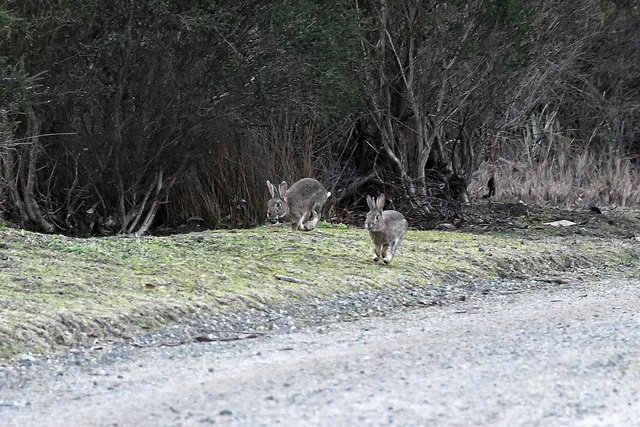
“We’ve just happened to notice them. Like other people might see them as flashy at the corner of their eye and think, it’s just a rabbit. But they are bandicoots.”
Dale said the site currently offers little natural protection for bandicoots, with most existing cover made up of invasive weeds such as blackberry and pampas grass.
Major restoration works are planned, including wetlands, native grasslands and habitat corridors, but those landscapes will take four to six years to mature enough to provide dense cover for wildlife, including the bandicoots.
In the meantime, the rangers came up with the idea to do these bungalows.
“I did a lot of research. Couldn’t find much about it. I stumbled across a small article in South Australia. They built some bungalows. I went, wow. That’s exactly what we need,” Dale recalled.
Hakea shared that the bungalow design was adapted from similar work undertaken at the nearby Royal Botanic Gardens Cranbourne, where southern brown bandicoots have also been supported through temporary shelters.
“They were kind enough to spend a day with us, showing us some of their work and showing us their design and how they construct them,” he said.
Rangers estimate there are currently six to eight individual bandicoots in the immediate area, with another small group on the other side. The long-term goal is to connect these populations through habitat corridors created by revegetation and strategically placed bungalows.
The structures for bungalows are materials already on site, which is an extra bonus, Hakea shared.
“We are getting rid of wet weeds and using those to create habitat. In a lot of cases, the pallets that we’re using would otherwise just be landfill,” he said.
“All the material that we’re cutting from the trees on-site is all material that we would otherwise probably have to chip or remove from the site somehow.
“It’s a recycling in other ways there.”
Despite their small size, southern brown bandicoots play a major ecological role, turning over several tonnes of soil each year while foraging for insects, fungi and seeds, helping aerate the ground, improve water absorption and spread native plants.
Dale said supporting the species now would help build healthier soil and stronger biodiversity as Clyde Regional Park continues to take shape.
The species are listed as endangered, with populations declining due to habitat loss, fragmentation and predation by foxes and feral cats.
The future park also sits at the edge of fast-growing housing estates, with residential development already established along its northern boundary and further growth flagged to the west.
Dale admitted that the more housing development that happens down here, the more bandicoots are losing habitat.
“It’s happening really fast, so they’re losing habitat really quickly,” he said.
“They’re all already on the national register as an endangered species, and their numbers are in decline.”
But he said in the end, it’s all about how to find that balance and how to mitigate the risk and the impact on the environment.
“That’s what these bungalows are all about. It’s a risk mitigation and habitat improvement to enable some weed reduction and promote improved biodiversity on the site,” he said.
Between 80 and 100 bungalows are expected to be installed across one section of the park alone, alongside extensive planting of native vegetation.