As a recent Star News reader survey reveals strong support for the Coalition’s nuclear energy policy, experts say it highlights the “significant impact” that cost of living has on this election campaign, particularly the cost of energy.
Opposition leader Peter Dutton has proposed integrating nuclear power into the nation’s energy strategy to bring down household energy bills.
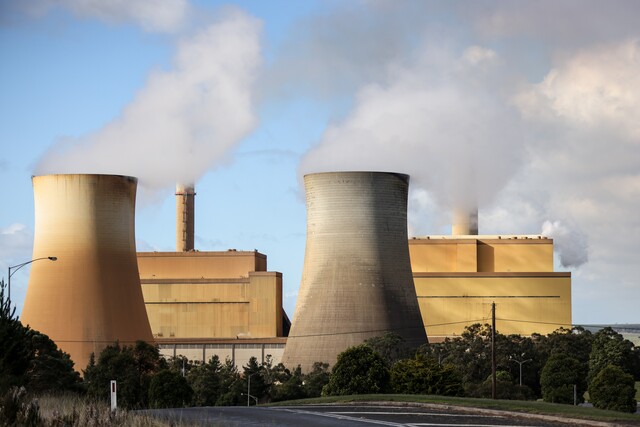
The proposal will see seven nuclear reactors at existing coal-fired power plant sites, including the one in Loy Yang in Victoria.
The first reactor is anticipated to be operational by 2036.
The nuclear initiative is projected to cost approximately $331 billion and aims to have all reactors functioning by 2050.
About 71 per cent of the 111 respondents in the South East survey supported nuclear energy in Australia, and more than half of the South East respondents backed a nuclear plant in their local area. In contrast, the results in Melbourne’s East and West indicated significant resistance to the nuclear option.
Monash University politics expert Dr Zareh Ghazarian first pointed out the sample was “very, very small”, given that the South East has more than 400,000 voters across the electorates of Holt, Bruce, Issacs, and La Trobe.
A small sample may not accurately reflect the broader population, leading to biased results.
But Dr Ghazarian said the results highlighted the significant impact that the cost of living has on this election campaign, particularly the cost of energy.
“It is really important to a lot of voters across these electorates, but also more broadly as well,” he said.
“The results reflect the overall dynamic in this political campaign in that it is focused on the cost of living.
“It is focused on people being concerned about how they will pay bills and also the responses that the major parties have to try to address these issues.”
Peter Angelico, president of South East Melbourne Manufacturers Alliance (SEMMA), said locals know that energy supply is a key to reducing the cost of living pressure and ensuring they have a consistent, sustainable supply of energy makes sense.
The peak body representing over 230 leading manufacturing companies located in the South East found the majority of members supported nuclear power.
They believe nuclear power can provide a cost-effective and reliable energy source for manufacturing businesses.
“As the population grows, our policymakers need to ensure our energy policies meet the growing needs of our city, our state and our nation,” Mr Angelico said.
“People know that if we don’t have a consistent, reliable energy supply one that is based on unreliable renewables, we will be hit with blackouts, brownouts, and rising energy costs.
“Essential sectors, like manufacturing, hospitals and medical facilities, aged and childcare and our emergency services must have that certainty of supply, nuclear offers that certainty.”
Speaking of the results of the survey, Mr Angelico believed locals understand that the future requires facts, not fear-mongering.
“People are more informed and understand the benefits and opportunities and want to give their children the best opportunities now and into the future,” he said.
La Trobe Liberal MP Jason Wood was contacted for comment.
Bruce Labor MP Julian Hill said nuclear was “not a serious policy“ and “by far the most expensive form of power generation for Australia“.
“This week, new revelations show that Dutton’s costings are cooked, as he has not even included the vastly expensive costs of dealing with mountains of radioactive nuclear waste.
“Australia needs new, cheap power now, through clean, reliable renewables.“
Greens candidate for Bruce Rhonda Garad said the survey results were “interesting” and showed people in South East were fed with misinformation about nuclear power.
Ms Garad, who is a public health academic, said nuclear power was not safe, cheap, quick, or efficient.
“Nuclear power is going to put prices up. It is at least ten to fifteen years away, if at all,” she said.
“What people also don’t know is that nuclear reactors take a huge amount of water. In a drought-prone country like ours, it will deprive people of water because that will have to be prioritised. Otherwise, it will become a risk.
“People are being fed wrong information that these are cheap, quick, efficient, and safe.
“They are none of these. I understand that there is a high favourability because people are being told the wrong information deliberately.”
Ms Garad flagged the finding by the Commonwealth Scientific and Industrial Research Organisation (CSIRO).
A draft report by the national science agency in December last year found no unique cost advantage in nuclear technology, due to the substantial nuclear re-investment costs required to achieve long operational life.
The draft report found renewables continue to have the lowest cost range of any new-build electricity generation technology.
The draft report also maintained the total development lead time for nuclear in Australia would be at least 15 years.
A report commissioned by the Coalition and written by economic consultancy Frontier Economics suggested that integrating nuclear energy into Australia’s National Electricity Market could lead to significant reductions in total system cost, up to 44 per cent less than relying solely on renewables and storage.
However, the report did not provide explicit projections regarding the direct impact on household energy bills.
When asked if the support for nuclear power in South East shown in the survey could reflect the political tendency in the area, Ms Garad said the energy choice should be science-based.
“Energy should not be politicised,” she said.
Mr Ghazarian from Monash University said the divide in energy choice goes to the heart of climate policy and the energy policy in Australia.
“For a very long time, national governments appeared unable to have a coherent and cohesive response to energy and climate policy,” he said.
“We think back to the Rudd years, the Gillard years. We think back to Tony Abbott. We think back to Malcolm Turnbull, where climate as a policy issue was really troubling for them and very difficult for them to try and work through.
“I suspect what we have here is that continuation of the debate and questions presumably from voters about how the energy mix, energy security, energy price are going to impact them.”