A Greater Dandenong Council audit has shown a stagnation in canopy coverage across the municipality, but still on track to meet its 2028 target.
The Canopy Cover Audit report tabled by council officers at the council meeting on Monday 16 March, shows a mere 0.5 per cent canopy cover increase in two years – up from 14.1 per cent in 2023 to 14.6 per cent in 2025.
The highest percentage is on public land (18 per cent, up from 16.7 per cent), ahead of private land (11.8 per cent, up from 10.3 per cent).
According to the council report, it’s not unusual to see the highs and lows given the seasonality change of tree growth.
It also notes the adverse impact of El Nino, which describes drier and hotter conditions across the country.
The council’s objective is to increase canopy coverage from a paltry 9 per cent in 2016 to 15 per cent by 2028, with audits reporting to the council every two years.
Councillor Rhonda Garad says statistically the goal is achievable by 2028 however, the objective should be to protect residents from extreme heat, which the audit doesn’t achieve.
She says trees aren’t being planted in areas where it’s most needed such as private lands and multi-level dwellings, but rather in council-owned public parks.
“We can plant out Dandenong Park – we can go to town, and increase percentage by three – but that’s not achieving the objective of protecting the environment. That’s my whole issue with this strategy.
“They are just looking at numbers which don’t in itself tell the whole story. Until they have a strategy in deliberately planting in high traffic areas, an incentive-based planning scheme that incentivises the builders to maintain the scheme, it won’t get the protective scheme that you want.
“It’s a very unnuanced report and strategy, that really isn’t achieving the goal that we wanted to achieve. It’s even failing at it.”
She says if trees aren’t surviving the extreme heat, the council needs to reconsider the type of trees that are being planted and ways for trees to survive, such as expensive tree baths in Thomas St and Webster Street.
However, this method doesn’t achieve the “numbers” due to expensive costs for the water baths and it has slowed progress.
Instead, she calls council to cease and review its Urban Forest Strategy supported by the Greening Our City: Urban Tree Strategy 2018-28, and employ a more comprehensive strategy.
“I think they (council) should be honest and realistic, and stop pretending they had this comprehensive program that’s working. They should say we don’t have investment therefore we will only plant X number of tress that would bring a 5 per cent increase.
“Also say, let’s do the numbers and see what it costs to do a comprehensive program.”
She also urges council to start discussions and negotiation with builders and developers over incentives to retain trees instead of chopping them down.
According to the report, the measurement of canopy cover is done through a point sampling method across three main categories the municipality, on private land and on public land
It also looks at suburbs and major activity centres to provide further insights.
The first mapping audit using canopy cover data was in 2016, when a 9.9 per cent cover was reported.
In 2023, Council passed the Tree Protection on Private Land Local Law which requires landowners to obtain a permit to remove any tree with a diameter of 40cm or larger as measured 1.4 metres from the ground.
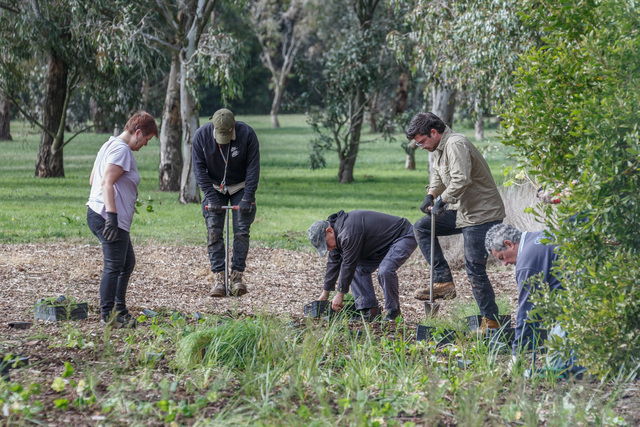
Greater Dandenong has reportedly planted more than 31,000 street trees since 2014, with an ongoing target of 2000 street trees a year.
Additionally, over 22,000 indigenous plants were planted in revegetation projects across Greater Dandenong in the 2024-25 financial year, as reported in the council document.