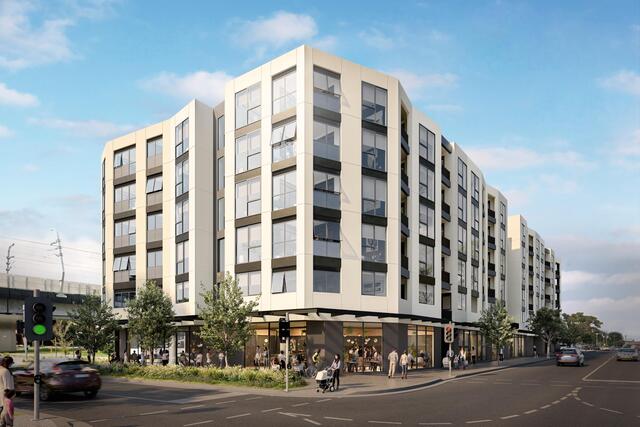
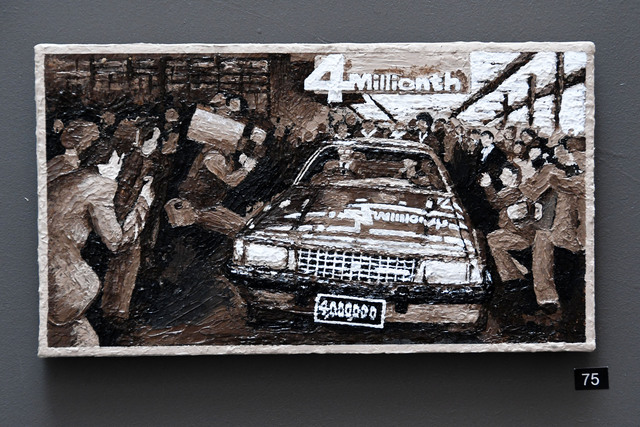
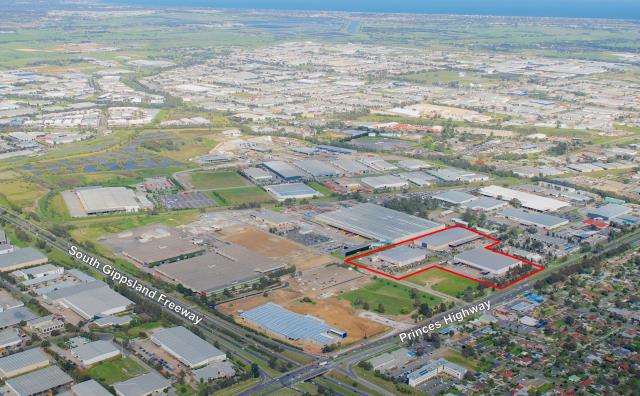
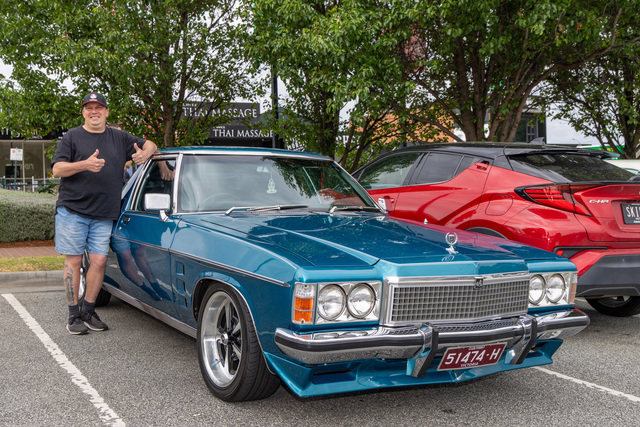
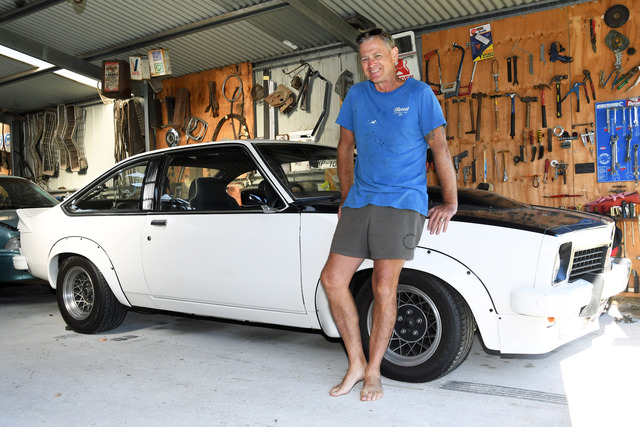
This year marks 100 years of General Motors Holden – which opened a large assembly plant off Princes Highway, Dandenong South in 1956. The 153-acre site – which featured its own railway station – was sold in 1997 to become an industrial estate, Estate One. PETER WHELAN, who worked as a Holden clerical employee at Dandenong for 32 years, looks back at GMH’s heritage.
In 1852, seventeen-year-old James Alexander Holden arrived in South Australia from Staffordshire, England. Four years later he set up shop in King William St, Adelaide, as a leather-worker and saddle-maker. By 1865, with business booming for J.A. Holden and Company, the firm moved to bigger premises.
In 1872, a new partnership is formed with Alfred James Birks, and registered as Holden and Birks. However, the partnership was short lived and dissolved in 1875, due to a lack of expectation of Birks by Holden. Four years later Holden takes his 20-year-old son, Henry James into the business and the name is changed again to J.A. Holden and Son.
In 1885, Henry Frederick Adolf Frost, a German born Sadler and Business man became a junior partner, and the company name changes again to Holden & Frost. It continued in leatherwork and small- scale ironmongery, then graduated to repairing, and eventually building horsedrawn carriages and coaches. In 1887, James Alexander Holden died, aged fifty-two, and Henry Holden became senior partner.
In 1905, a third generation Holden – Henry’s son Edward Wheewall Holden, joined Holden & Frost. In 1908, Holden & Frost engaged in minor repairs to car upholstery and was soon manufacturing hoods and side curtains. In the same year in the USA, General Motors (GMC) is founded by William Crapo Durant. Three years on, GM Export Company is formed. Then in 1913, Holden & Frost began production of complete motorcycle sidecar bodies. In 1914, they produced its first complete custom-made car body, and GM Export Company appointed a field representative to Australia, based in Sydney. The first GM cars arrived just before WW1.
Due to the Australian Federal government’s wartime overseas trade restrictions, Holden & Frost commenced large-scale production of car bodies. The company bought another Adelaide motor body builder, F.T. Hack Ltd, to increase its facilities and during 1917, produced 99 car bodies mainly from Dodge and Buick chassis. With WW1 over, Holden’s Motor Body Builders sets up as a division of Holden & Frost. It produced 587 bodies in its first year. During 1919, Holden’s Motor Body Builders became a registered company. Business rapidly took hold and HMBB started to revolution the industry with state-of-the-art production machinery and designs. Holden’s bodies were now price competitive across the country. They produce nearly 1600 bodies for the year.
1920 starts a boom decade for Holden. It installs a timber mill and has a production line operating. Speed in production time is cut to just five man-hours per body from over 160 man-hours per body in 1917. The USA produced a constant supply of new body designs. Holden was up to the task responding with a vast array of suitable body styles. The scale of production was so vast, that in 1923 Holden built 12,771 car bodies. Now short of space, Holden purchased a site at Woodville, South Australia, for the construction of a massive new plant. A year later, Holden’s new Woodville plant was opened featuring the country’s most modern production line. The Americans were so impressed with the new set-up, GM Export Company decided to shelve plans to open its own body-building factory and instead signed a contract with Holden’s ensuring that the Woodville plant manufactured bodies only for GM vehicles. This is an absolutely massive deal for Holden. It allows HMBB to import blueprints of forthcoming GM models and have the bodies ready by the time the new chassis reach Australian shores, and still be free to produce for other car-makers at the original King William Street plant which is further extended. At year ending 1924, Holden had produced no less than 65 body styles and a total output of 22,150 units, that included 11,060 for GM. Production soared in 1925 when Holden produced 34,309 car bodies including then first closed body types. The company’s body-building operation is now the biggest outside North America and Continental Europe. In addition to car bodies, HMBB turns out railway carriages, bus and tram bodies and other miscellaneous items.
1926 … General Motors Australia (GMA) is formed with headquarters in Collins Street, Melbourne. All five mainland state capitals have assembly plants. As well as using Holden bodies, GMA purchases tyres, springs, batteries, paint and many other parts from local suppliers. 1926 proves Holden’s best to date for car body production, with 36,171 units built.
However, the following year output dips slightly to 34,000 units: but headwinds are approaching.
1930 The full force of the worldwide depression does not spare Australia and hits Holden hard. The company has just completed a major expansion and is caught off-guard. The economic situation continues to deteriorate into 1931 and Holden’s Motor Body Builders is closed for much of the year. The company fills just 1651 car body orders compared with over 36,000 five years earlier. The GM Corporation (USA) buys the entire Holden’s Motor Body Builders operation and merges it with (GMA) to form General Motors Holden’s, to be known as GMHA.
1932 and beyond continued GMHA’s sales slide. In 1934 a troubleshooter was sent to Australia and told that if the company cannot be made profitable, it is to be closed down. Despite this dire directive, GMHA fights back and produced its first coupe – the utility. Gradually the motor industries outlook improved. In 1935 GMHA experience a sales lift with a declared profit. With the world emerging from the depression, car manufacturing confidence is returning. The company produces bodies for imported Oldsmobile, Pontiac, and Chevrolet, chassis. GMHA builds the first of its all-steel bodies beating GM in the USA by a full year.
1936 sees GMHA set up new headquarters and a new assembly plant on 20 hectares of land at Fisherman’s Bend, Melbourne. The layout included provision for a foundry and engine shop. GMHA and overseas executives started discussing the manufacture of a complete car within Australia, with guaranteed massive technical support from GM(USA).
With World War2 approaching, the current plan for an Australian car is shelved. By 1940 all GMHA factories were working for the war effort. However, the company wasn’t uninventive during those worrisome years. GMHA became the first company to mass-produce internal combustion engines in Australia. They produced the Gypsy Major aeroplane engine, the Gray Marine engine, numerous amphibious transport and other military hardware. 1943 saw the winding down of military contracts and GMHA revived plans for the Aussie car. Engineers started designing ‘Project 2000’ – the car they believed the company is best set to build. Dozens of variations, alternative designs and mock-ups followed. GMHA undertook to manufacture completed cars without subsidy or government tariff protection. In late 1944, GM Corporation (USA) approved the project in principle.
1945: GMHA emerged from WW2 with a full-scale foundry and the ability to make engine blocks and other mechanical projects. Design work on an Australian car started in the USA. By 1946 the project was renamed ‘Project 2200’ design, and GMHA engineers were sent to Detroit, Michigan, USA, to match styling models, drawings, and engineering ideas with their own development. Three handmade prototypes are eventually agreed upon and produced. Later that year the three cars are shipped to Fisherman’s Bend.
1947 The Detroit-built protypes were extensively tested on rough dirt roads on the outskirts of Melbourne: where the steering and suspension together with other components are modified as a result.
1948: A production run of 10 cars was secretly conducted in April, followed by series production. Plans are made for the official launching date to the public in November, by Prime Minister, Ben Chifley.
The first Holden rolled off the GMH Fisherman’s Bend production line on 19 November 1948; and the last Holden at the Elizabeth plant on 20 October 2017, ending 69 years of local production. GMHA produced almost 7.7 million cars over that period; and at its peak employed almost 24 thousand male and female workers.
It is said jestingly that after World War II, General Motors Holden had an employment officer travelling on each migrant ship destined for Australia.
The reason was to encourage as many new arrivals as possible to sign on as factory workers at either of their Fisherman’s Bend or Dandenong manufacturing plants.
Demand for general labour was so great and housing so acute, that in the early 1950s, a new suburb on the eastern outskirts of Dandenong was built to accommodate the population surge or workers needed not only for GMH, but those for nearby enterprises such as Heinz Foods, and International Harvester.
The new suburb was named Doveton. And from then on Doveton became home for many generational Holden working families.
Due to mainly competition challengers, the Dandenong manufacturing plant ceased its primary Holden vehicle production in 1988.
Other Dandenong Operations:
Spare Parts
Besides the car plant, GMH had a large warehouse that stocked the Australian supply of spare parts. It was called NASCO (National Automotive Service Company) that served as the official “in-house” parts, accessories, and service division for General Motors-Holden’s (GMH) in Australia.
It supplied genuine parts, approved accessories, and specialized components for Holden Vehicles, as well as imported GM brands, like Chevrolet, Pontiac, and Vauxhall, acting as the major distribution network for all GMH-approved products.
Orders were filled and delivered by either air or road all year round.
Frigidaire & Trucks
General Motors Holden transferred their Frigidaire Refrigeration Production from Dandenong to New Zealand in 1970.
The plant was repurposed for Isuzu truck manufacturing of Chevrolet/Bedford trucks before the site was closed in early 1990s.
GMH introduced Isuzu trucks into Australia in 1972 branded as ‘Bedford by Isuzu’.
In 1975 the Bedford name was dropped and Isuzu stood on its own. The Isuzu truck market was strong in Australia capturing around 20 per cent of the Australian truck market, and employing approximately 120 workers.
Despite this success, Japan head office deemed it more profitable to have the trucks imported as CKD (completely knocked down) kits and assembled locally in Bayswater.
Terex/Euclid
General Motors (GM) introduced the “Terex” brand name in 1970 to represent its earthmoving equipment division.
While General Motors Holden (GMH) had a long history of importing GM equipment, the Terex brand specifically replaced the former “Euclid” earthmoving equipment line in Australia around this time.
The equipment was produced under the “Euclid” brand which GM purchased in 1953, with Australia importing these products long before 1970.
Following the 1970 change, Terex heavy equipment, including large dump trucks for the Australian mining industry, continued to be distributed through GM channels. GM sold Terex in 1981.
Detroit Diesel/Allison
In the 1970s and 1980s, Detroit Diesel engines were exceptionally popular in Australia for heavy-duty, long distance road transport, often paired with Allison automatic transmissions … hence the division name of Detroit Diesel/Allison.
Listed here are some of the primary truck names serviced by Detroit Diesel Allison in Australia during those times.
Kenworth (PACCAR) was a major user of these engines and transmissions assembled at their Bayswater plant.
Other trucking clients were: Western Star, Mack, White and International Harvester.
The warehousing facility for this division was a sectioned off area of the NASCO building where the Engines & Transmissions were stored as well as an abundant supply of spare parts.
Eventually, General Motors sold off the division as it did Frigidaire.
Brief Sales Statistics
The biggest selling Holden of all time was the HQ Kingswood in production from 1971 to 1974, with 485,650 units sold.
In 1978, Holden celebrated its 25th consecutive year of market leadership as it introduced the Commodore nameplate to Australia as a replacement for the iconic Kingswood.
Between 1997-2000, the VT Commodore series became Holden’s best ever selling Commodore with 303,895 units sold.
The total number of Holdens made in Australia since 1948 was 7,687,675 vehicles.