
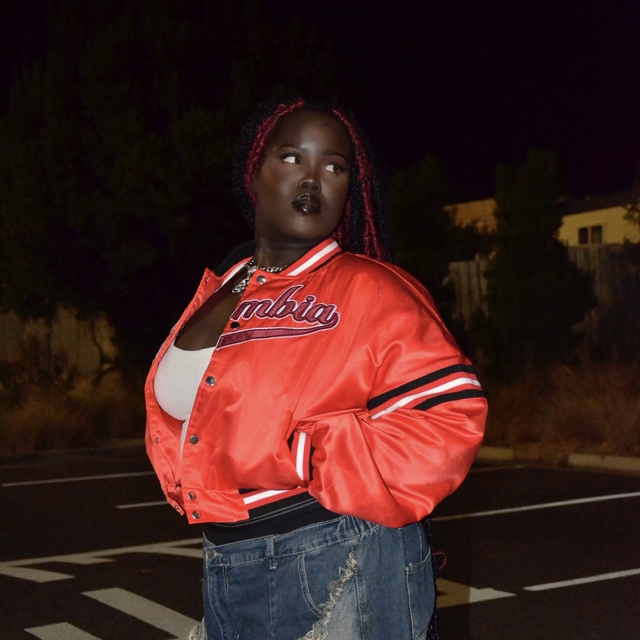
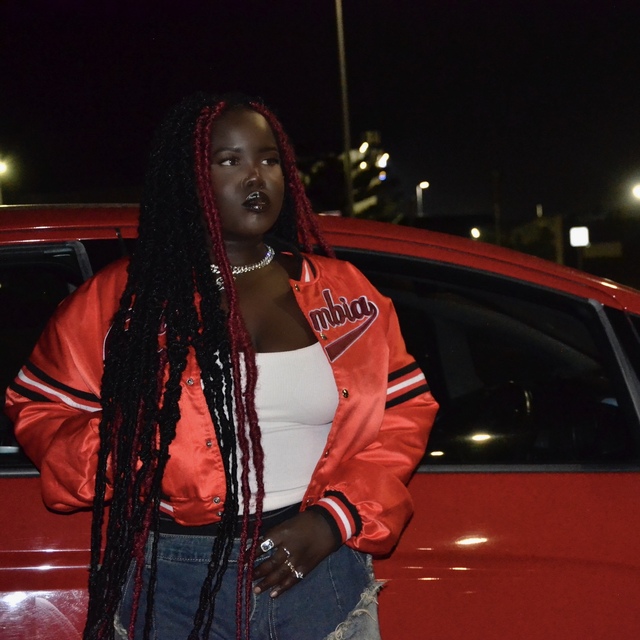
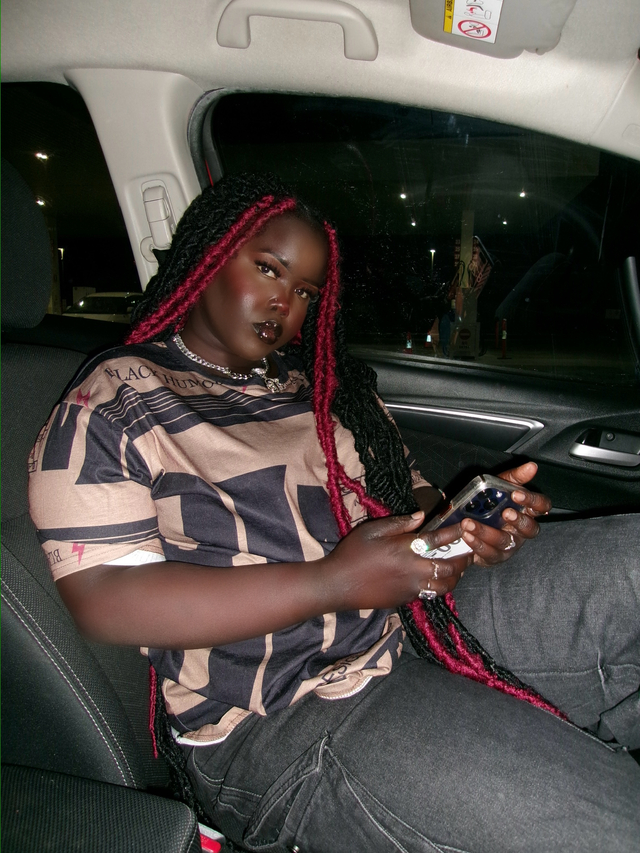
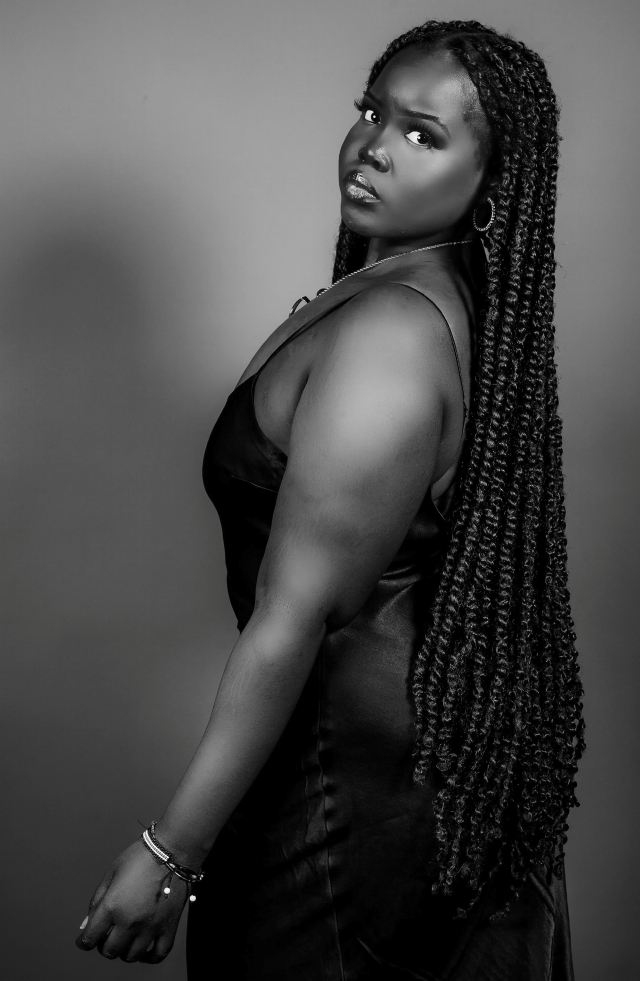
From grief to greatness, a rising musician is finding the courage to speak her truth and inspiring others to rise with her.
“Don’t let your pain consume you, consume your pain and turn it into something positive.” she said.
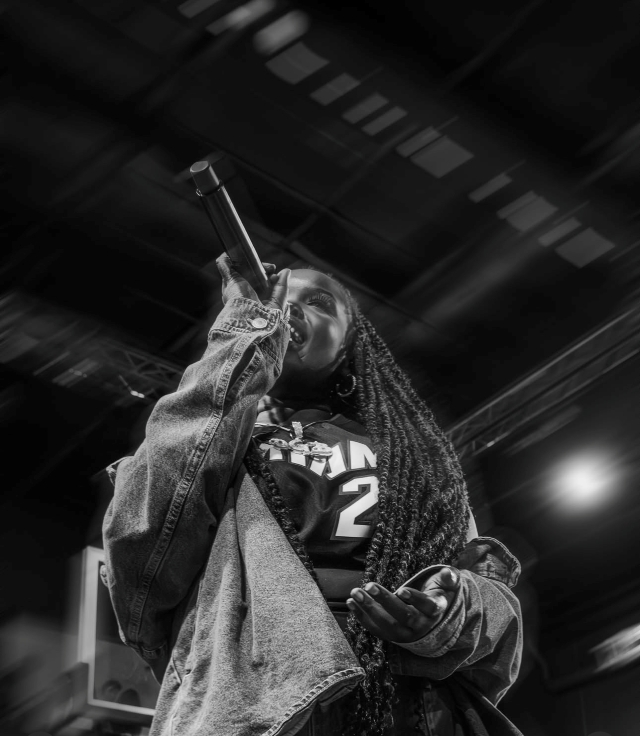
When OGB steps onto a stage, there is a stillness that falls over the room. Her voice soft, aching and honest carries the weight of lived experience and a fire that refuses to fade.
For the Casey-based artist, music isn’t just a career. It is memory, healing, and a bridge between who she was and who she’s becoming.
Born in Australia to South Sudanese parents who migrated in 1998 to escape the civil war, OGB grew up balancing two identities — the culture of home and the reality of being raised in the diaspora.
Creative by nature, she always dreamed of being a musician but doubted whether she belonged or whether her voice was worthy.
That changed last year. A group of friends, Sovannica, Txnski, and online friend BoyFranck pushed her into a recording studio for the first time.
There she met YTS Gucciboi, and soon after her brother Lowkey
introduced her to producer Eric, who helped her record the final vocals for “Haunted,” the first track (Haunted) she ever wrote.
“Having friends who are also artists definitely made it so much easier for me to step out of my comfort zone and it is part of the reason why I stay so motivated to keep creating,“ OGB said.
At the centre of OGB’s music is her late sister Flora, who tragically passed away on 4 May 2022.
Flora, who had her own presence in entertainment, was the reason OGB stepped into music at all.
“Starting my music career is my way of keeping her memory alive,” she said.
“I want to make sure that when people see me, they also see her and her legacy will forever live on through me.”
“Haunted,” one of OGB’s most recognisable tracks, dedicated to her sister, was written during her grief.
“I was in a really dark place, feeling lost and didn’t know what I wanted to do or what direction I wanted my life to go,“ she said.
“So when I wrote Haunted, it turned out to be very healing for me.”
Last year, she performed a show that fell on the anniversary of Flora’s passing and broke down on stage.
“It was the most emotional show I’ve ever done,” she said
“However the love I received from the crowd and my team definitely kept me going and motivated me to finish my set.”
OGB describes her music as “a diary,” a place where she unpacks love, pain and cultural identity.
She has released three songs so far, with another dropping this month, and is deep in the process of finishing her first EP, planned for release early next year.
In the year since she began recording and performing, OGB’s confidence has surged. She is still reflective, still soft-spoken, but firmer in her sense of purpose.
“When you’re just starting you sometimes don’t know if you’re really good enough to continue,” she said.
“But honestly within this year and the more I create, it has really solidified the fact that this is definitely something I’m supposed to be doing.”
As a young African-Australian artist, OGB is conscious of how her work is perceived and what she wants it to represent.
“I hope they take away from the fact that we as immigrants or people who are a part of the diaspora have so much to offer to the community outside of what the media presents,” she said.
“We are so talented and we truly have the ability to contribute so much to making Australia a greater country.
“Not only that but making people aware that there are other genres than what is usually played on mainstream radio, and that there is room for more POC.”
Criticism has shaped her too. Not everyone has embraced her early demos, and some songs have been scrapped entirely.
“Not every song is going to be a banger and that’s okay,“ OGB said.
Navigating the current music climate has also meant making deliberate choices about who she collaborates with. With a violent drill dominating parts of the scene, she’s careful.
“I don’t condone violence towards anyone,” she says. “I won’t work with people involved in that lifestyle.”
With rising violence affecting South Sudanese communities, OGB doesn’t shy away from speaking to the next generation.
“Your parents being immigrants or their trauma is not an excuse anymore,” she warns.
“This is your future we are talking about, not theirs and you are the only person in charge of your own destiny.
“Continuing this cycle of violence within our community will get us nowhere, so don’t let yourself get left behind. We are the future leaders of our generation, its time we started acting like it.”
She wants young people to know they are not alone and help is one call away.
OGB is closing out the year with performances at Rhythm of Sudan, Soirée on 28 November, and the Equatorian Gala on 13 December.
After a well-earned break, she’ll return in the new year with her debut EP — a dedication to Flora and “the fallen,” and a testament to who she truly is.
Success, for her, isn’t streams or stages. It’s knowing the people she loves are proud.
“It genuinely makes everything so worth it,” OGB said.
Her long-term dreams are bigger still: more projects, a national presence, and eventually, an international audience.
If there’s one thought she wants listeners to leave with, it’s this:
“Don’t let your pain consume you, consume your pain and turn it into something positive – find a healthy outlet, whether it be music, sport or art,” OGB said.
“Find your voice and make sure people hear you until you can no longer be ignored. Keep God in your life and you’ll be okay.”
“Do it not only for yourself but for your family and your country. Give it a try, you never know where you might end up.”