
Last night, I had the honour of being invited to the Cranbourne Chamber of Commerce for a speed business networking event.
What struck me most wasn’t the business cards or elevator pitches.
It was the volunteers.
Quietly, diligently, without fanfare – they spoke about food banks, clothing drives, blood donation campaigns, welfare support, youth mentoring and mental health initiatives.
Many of them juggle full-time work, mortgages, rising bills and family responsibilities.
And as I sat there listening, one thought kept circling:
Why?
Why add more to an already full plate?
As Sikhs, we grow up with the concept of sewa (selfless service). It is not optional; it is foundational.
Service to others is service to humanity.
The practice of langar – the free community kitchen found in every gurdwara worldwide, feeds millions, regardless of religion, race or status.
Sit together. Eat together. No hierarchy.
It is part of our DNA.
But what about those who did not grow up with that framework?
Why do people volunteer?
And more importantly – what does volunteering actually do for us?
Research tells us something powerful.
Volunteering is not just “nice.” It is neurological.
When we help others, our brain releases dopamine, serotonin and oxytocin – chemicals linked to happiness, bonding and reduced stress. Psychologists call it the “helper’s high.”
Studies have shown that people who volunteer regularly report:
• Lower rates of depression
• Greater life satisfaction
• Stronger social connections
• Increased resilience under stress
Some longitudinal studies even suggest that consistent volunteering is associated with lower mortality rates and better physical health as we age.
In simple terms?
Helping others helps you.
As a youngster, I completed the Duke of Edinburgh Award.
Service was built into the framework, as is the ideology of Salvation Army.
At the time, it felt like another box to tick. Looking back, it built something deeper – responsibility, perspective and the ability to handle discomfort.
And as Dad often says: “Life is not about avoiding the hard stuff. It’s about how you handle it.”
Volunteering teaches you to handle it.
It shifts your focus from “Why is this happening to me?” to “How can I contribute?”
And that shift changes everything.
At the Cranbourne Chamber of Commerce meeting, several committee members shared their volunteering journeys.
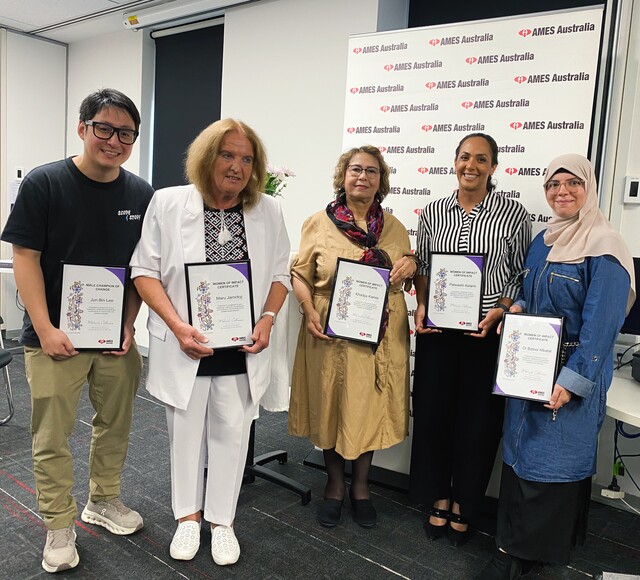
Not one spoke about recognition. They spoke about connection. About purpose. About community.
And that is what we are missing in today’s rat-race world.
We scroll more.
We compare more.
We isolate more.
Yet the antidote might be as simple as mowing an elderly neighbour’s lawn, helping at a local food drive, coaching a junior sports team, or serving a meal.
If you are feeling lonely – volunteer.
If you are overwhelmed – volunteer.
If you are searching for purpose – volunteer.
If you want your children to grow up grounded, resilient and empathetic – encourage them to serve.
Because service builds perspective.
Perspective builds resilience.
Resilience builds strong communities.
Volunteers rarely make headlines.
But they are the invisible architecture of society.
They reduce pressure on systems.
They strengthen neighbourhoods.
They model responsibility to the next generation.
In Sikhism, sewa is not charity. It is humility in action.
And perhaps that is the lesson for all of us – regardless of faith or background.
Truth be told… volunteering might just be the backbone of survival in today’s restless world.